

If AI drafts a document your customers and auditors will read, someone has to show what the AI drafted, what a person corrected and who approved it. That question decides most AI purchases in SAP today, including SAP Migration Services. Speed matters, but a reviewer who signs off on an invoice layout needs evidence, not a promise. At 2iSolutions, we treat governance as the buying question, and the checkpoints below show what a reviewer should see before sign-off.
What Does Governance Mean for AI in an SAP Forms Migration?
Governance means a documented chain that shows what the AI produced, what automated checks tested, what a human changed and who approved the result. For a forms migration, it turns AI output from a black box into a record an auditor can follow from start to finish.
Forms look simple. They are not. An invoice, a delivery note or a purchase order carries legal fields, tax logic, customer branding and print rules built up over many years. When you move from SAPscript or Smart Forms to Adobe Forms during an S/4HANA move, each of those details needs a destination.
AI can speed up the drafting. It cannot carry the accountability. So the real question for a buyer is not "how much does the AI automate?" but "what can I inspect afterward?"
Why forms carry more risk than their size suggests
A single form can feed a customer invoice, a customs filing and a tax audit trail. If a field drops off the page or a total rounds differently, the error reaches people outside your company. Customers notice first. Auditors notice later, and their questions run harder.
Forms also hide logic. Print programs, conditions and text modules often sit in places no one has opened for a decade. That is where AI-assisted drafting needs the tightest controls.
What we do not claim
We do not claim full automation. Any vendor who says AI converts every form with no human involvement is selling a story. Our position is simpler: AI drafts, checks verify, and a named person decides.
Which Facts Should the System Supply Before AI Drafts Anything?
Before any drafting starts, the AI should read facts directly from the SAP system: fields, data bindings, conditions, text elements and output types. Drafting from system facts, rather than from a screenshot or a guess, gives reviewers a source they can verify line by line.
This is the first checkpoint, and buyers skip it most often. If the AI works from a PDF of the old form, it guesses at the logic behind each field. If it reads the form definition itself, it knows which data element feeds which box on the page.
Consider a delivery note with a conditional block that prints only for export shipments. A screenshot shows nothing about that rule. The system definition does. An AI that reads the definition can carry the condition into the new Adobe Form, and a reviewer can trace it back to its origin.
What a reviewer should ask for at this stage
Request a fact inventory from the delivery team before drafting begins. It should list what the system supplied and what the team had to infer. A short list helps:
- Form definitions and field bindings read from the source system
- Output types and the programs that call each form
- Conditions, text modules and language variants
- Any element the tooling could not read, flagged for manual handling
The last item matters most. A trustworthy process names its gaps up front instead of hiding them.
How this connects to the wider program
Forms rarely move alone. They sit inside a larger program that includes data, interfaces and custom code. Teams that already run SAP Migration Services for those workstreams can reuse the same inventory discipline for forms, and the SAP Sapphire data migration takeaways show how the wider migration conversation is shifting. So the fact list becomes one more artifact in a single audit trail, not a separate document that nobody owns.
How Do Automated Checks Catch Errors Before a Human Looks?
Automated checks compare the new form against the old one before any person reviews it. They test field presence, data binding, totals, conditions and layout, so the human reviewer spends time on judgement calls instead of hunting for missing fields.
Think of these checks as a filter. They do not replace review. They make review cheaper and sharper, because the obvious defects are already gone when a person opens the file.
Good checks share a few traits. They run the same way every time. They produce a written result, not a verbal assurance. And they fail loudly when something does not match.
The checks worth asking about
A reviewer should expect to see results for each of these:
- Field presence: every field on the old form appears on the new one, or the report explains why not.
- Data binding: each field pulls from the correct source element.
- Totals and rounding: the same test document produces the same amounts on both forms.
- Conditions: each branch, such as export versus domestic, prints the right block.
- Language variants: translated texts load for every language the business uses.
- Layout tolerance: page breaks, logos and address windows land where print rules require.
Each item should carry a pass or fail result and a link to the test document behind it. If a vendor shows only a summary score, push for the detail.
Why test documents matter
A check is only as good as the documents it runs against. A single clean invoice proves little. A good test set includes a credit memo, a multi-page order, a foreign-currency invoice and a document with unusual tax codes. Pull these from real history, with sensitive data masked, so the tests reflect how your business actually prints.
Where Does the Human Reviewer Fit in the Process?
A human reviewer owns the judgement calls the checks cannot make: wording, legal accuracy, branding and edge cases. The reviewer reads the AI draft, the check results and the list of changes, then approves or rejects the form with a recorded decision.
This is where governance becomes visible. Automation can flag a mismatch, but it cannot decide whether a revised legal footer still satisfies a customer contract. Still, a named person must make that call, and the record must show who did.
What a good review record contains
Request a review record for one real form. It should show:
- The original AI draft, unedited
- Every change a person made, with the reason
- The check results at the time of review
- The reviewer's name, role and approval date
- Any open issue accepted with a documented rationale
Notice the first item. If the vendor overwrites the draft, you lose the ability to measure how much the AI got right. Keeping the original draft also helps you improve the process over time, because patterns in human corrections point to weak spots in the tooling.
Who should review what
Different forms need different reviewers. Finance owns invoices and credit memos. Logistics owns delivery notes and shipping labels. Procurement owns purchase orders. Assigning each form to its business owner prevents the common failure where IT approves a layout that the business later rejects.
Reviewers also need time. If a team schedules sign-off for the final week before go-live, the review turns into a rubber stamp. So plan it early, and plan it in batches so owners see a steady flow rather than a flood.
How Should Security and Data Handling Shape AI Use?
AI used in a forms migration touches real customer names, addresses, prices and tax numbers. A reviewer should confirm where that data goes, who can see it and how access is controlled, before any drafting begins on production-like content.
Security is easy to overlook because forms feel like layout work. But the test documents behind them carry live business data. Therefore a careless setup can copy that data into places it should never go.
Questions to put to the delivery team
Find out where the AI service runs and what it stores. Check whether test data is masked before it reaches any model. Learn who on the project can open the review records. If the work runs on SAP Business Technology Platform, review the team's approach against SAP BTP Security Best Practices, covering identity, role separation and data protection. The answers should be specific, written and tied to named roles.
Separating duties
The person who drafts a form should not be the only person who approves it. Role separation sounds like bureaucracy, but it protects both sides. It shields the business from errors and shields the delivery team from blame when someone questions a decision months later.
For teams planning broader automation, the same principles apply to SAP AI Integration across other workstreams. As a result, a governance pattern built once for forms can extend to data mapping, test generation and documentation.
What Should You See Before Signing Off on Go-Live?
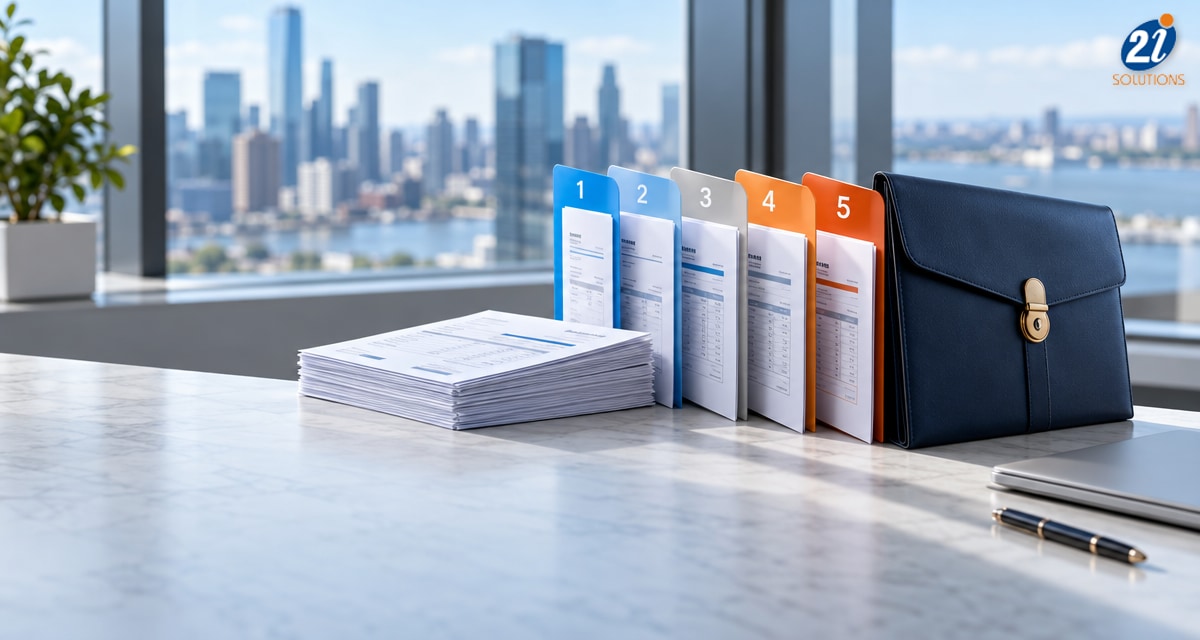
Before sign-off, a reviewer should hold five items: the fact inventory, the automated check results, the human review records, the security confirmation and a list of known gaps. Together they prove the forms are accurate and show who answers for them.
Think of it as an evidence pack. It should fit in a folder you can hand to an auditor without a briefing. If the vendor cannot assemble it, the process was not governed in the first place.
A practical sign-off sequence
Use this order to keep the review orderly:
- Confirm the fact inventory covers every form in scope.
- Read the check results and sample at least a few failures to see how the team resolved them.
- Open three or four review records, choosing different form types.
- Confirm security answers match what the team actually does.
- Review the gap list and agree an owner and date for each open item.
Sampling beats skimming. A reviewer who opens real records learns more in an hour than from a polished slide deck.
What a weak pack looks like
Weak packs share symptoms. They rely on percentages with no source documents. They show approvals with no names. They describe checks in general terms but give no results. If you see any of these, pause the sign-off and ask for the underlying records. However, a short delay now costs far less than a customer-facing error after go-live.
Where AI Fits Into the Wider SAP Roadmap
AI belongs in a forms migration when it speeds drafting and leaves the evidence trail intact. The same logic applies beyond forms: any AI-assisted step in an SAP program should produce records that a reviewer can inspect and an auditor can follow.
Forms make a good first use case. The scope is bounded, the outputs are visible and the errors are easy to spot. Therefore a team that learns to govern AI here builds habits that carry into data migration, testing and documentation.
Buyers evaluating vendors should look past the demo. Ask how the vendor approaches SAP AI Solutions in practice: what the AI reads, what it produces, what checks run and who signs. Our own view at 2iSolutions is that the vendors worth trusting are the ones who volunteer their limits.
Frequently Asked Questions
Q. Can AI convert SAP forms without any human review?
A. No. AI can draft the new form quickly, but legal wording, branding and edge cases need a named person to decide. A process with no human approval leaves you with no one accountable when an auditor asks questions.
Q. What is the difference between Smart Forms and Adobe Forms?
A. Smart Forms is an older SAP tool for building print layouts, while Adobe Forms is the newer approach built on Adobe's form designer. Many S/4HANA programs move to Adobe Forms because it supports richer layouts and current SAP output management.
Q. What evidence should a vendor provide for AI-drafted forms?
A. Ask for the fact inventory, automated check results, human review records and a list of known gaps. At 2iSolutions, we assemble these into a single evidence pack so reviewers can sample real records before sign-off.
Q. Who should approve a migrated invoice form?
A. The business owner should approve it, which usually means finance for invoices and credit memos. IT can confirm technical accuracy, but the business must confirm the document meets legal and customer requirements.
Q. When should form review start in an S/4HANA project?
A. Start as soon as the first drafts exist, and spread reviews across the project. Leaving sign-off to the last week turns careful review into a rubber stamp.
What a Governed Forms Migration Gives You
A governed forms migration gives you more than a set of new layouts. It gives you a record: what the system supplied, what the AI drafted, what the checks found, what people changed and who approved each form. Therefore that record answers the questions auditors and customers ask long after go-live.
The path is straightforward. Start from system facts, run automated checks, assign business owners to review, protect the data and assemble an evidence pack before sign-off. Each step is simple on its own. The discipline comes from doing all of them every time.
Judge the evidence yourself: join the live session on December 2: Link
Put this to work on your own SAP estate
Everything described above is something we deliver, with an SAP architect reviewing every change an agent makes.
- Automated AI Agentic ABAP Code Remediation
- SAP Agentic AI Automated Testing
- SAP Agentic AI Landscape Assessment
- All five SAP Agentic AI offerings


Want this applied to your SAP estate?
Tell us where you are and we'll come back with a concrete next step.
Talk to our team